Track Your License
If you have already completed your TDC and successfully applied for your driver license, you can use our instant tracking tool below to check if your printed card is ready for pickup.
Free · Instant · Relayed live from the official LTO-NCR system, nothing is stored. Type DEMO to preview a sample result.
Understanding the Theoretical Driving Course
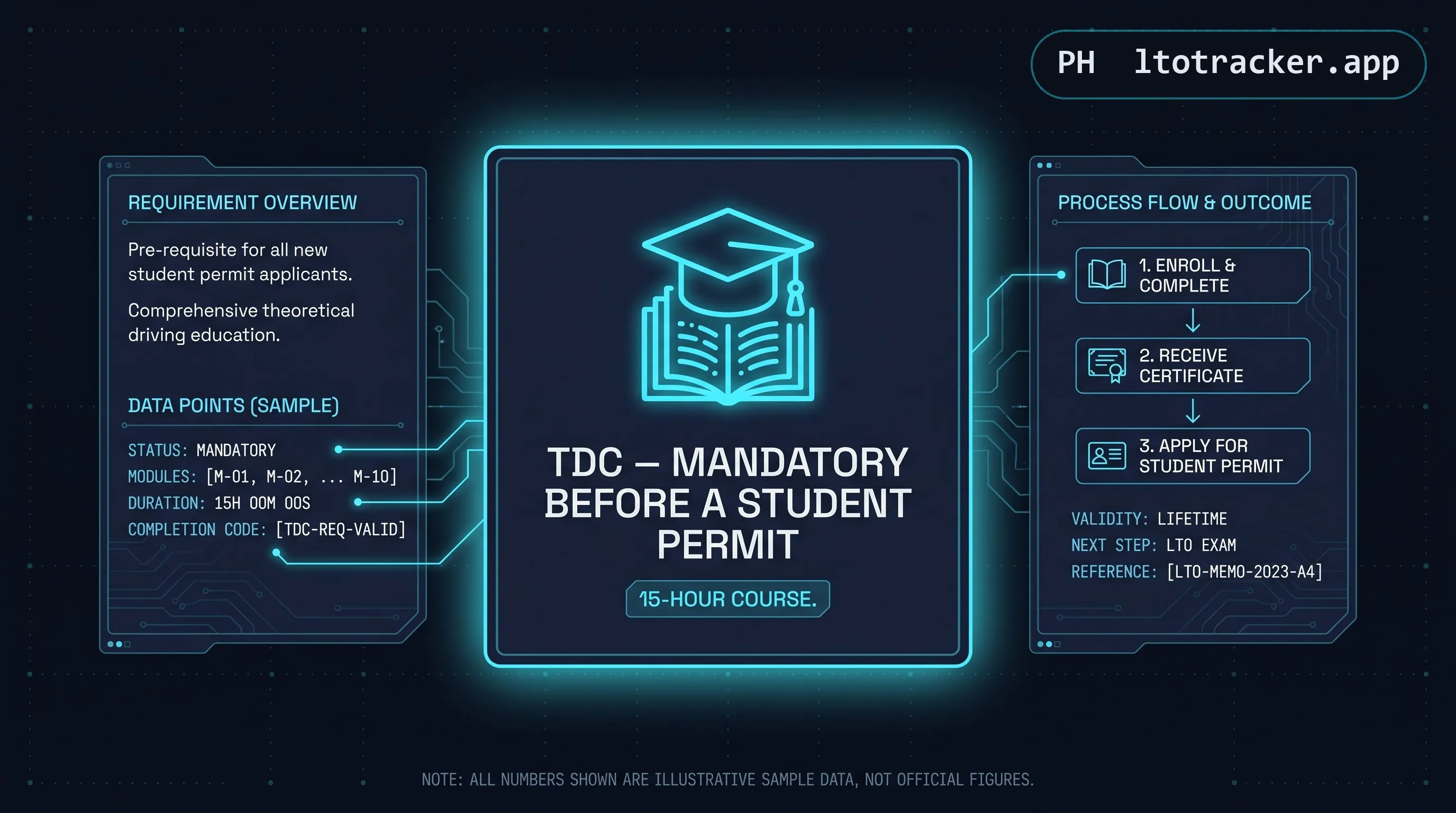
The implementation of the mandatory Theoretical Driving Course marks a monumental shift in how the Philippines approaches driver education and road safety. Before this requirement was enacted, individuals could secure a student permit with little more than a basic medical certificate and a completely filled out application form. This lenient process inevitably led to thousands of new drivers taking to the streets without any fundamental understanding of traffic laws, right of way rules, or the basic principles of defensive driving.
To combat the rising number of vehicular accidents attributed to driver error and ignorance, the Land Transportation Office introduced the Theoretical Driving Course as an absolute prerequisite for anyone applying for a Student Driver Permit. The course is essentially a rigorous fifteen hour academic program designed to instill the critical knowledge necessary to operate a motor vehicle safely and legally.
The curriculum of the theoretical driving course is standardized nationwide. It encompasses a wide array of essential topics, starting with the complex landscape of Philippine traffic laws, including the nuances of the Land Transportation and Traffic Code. Instructors spend considerable time dissecting the meanings of various road signs, from regulatory and warning signs to informational markers. Students also learn how to interpret pavement markings, such as solid yellow lines versus broken white lines, which dictate where overtaking is legal and where it is strictly prohibited.
Beyond pure rule memorization, a significant portion of the fifteen hours is dedicated to the philosophy of defensive driving. This involves teaching aspiring drivers how to anticipate the actions of others, how to maintain a safe following distance under varying weather conditions, and how to identify potential hazards before they escalate into dangerous situations. The course also touches upon proper road etiquette, the ethical responsibilities of a driver, and the severe legal and financial penalties associated with common traffic violations like driving under the influence or reckless driving.
You cannot simply sit in the back of a classroom and automatically earn your certificate. The course culminates in a final written assessment administered by the driving school. You must achieve a passing grade on this exam to prove that you have successfully absorbed the material. Only upon passing will your completion data be transmitted directly to the Land Transportation Office central database, officially clearing you to proceed with your student permit application.
The Option to Take Your TDC Online
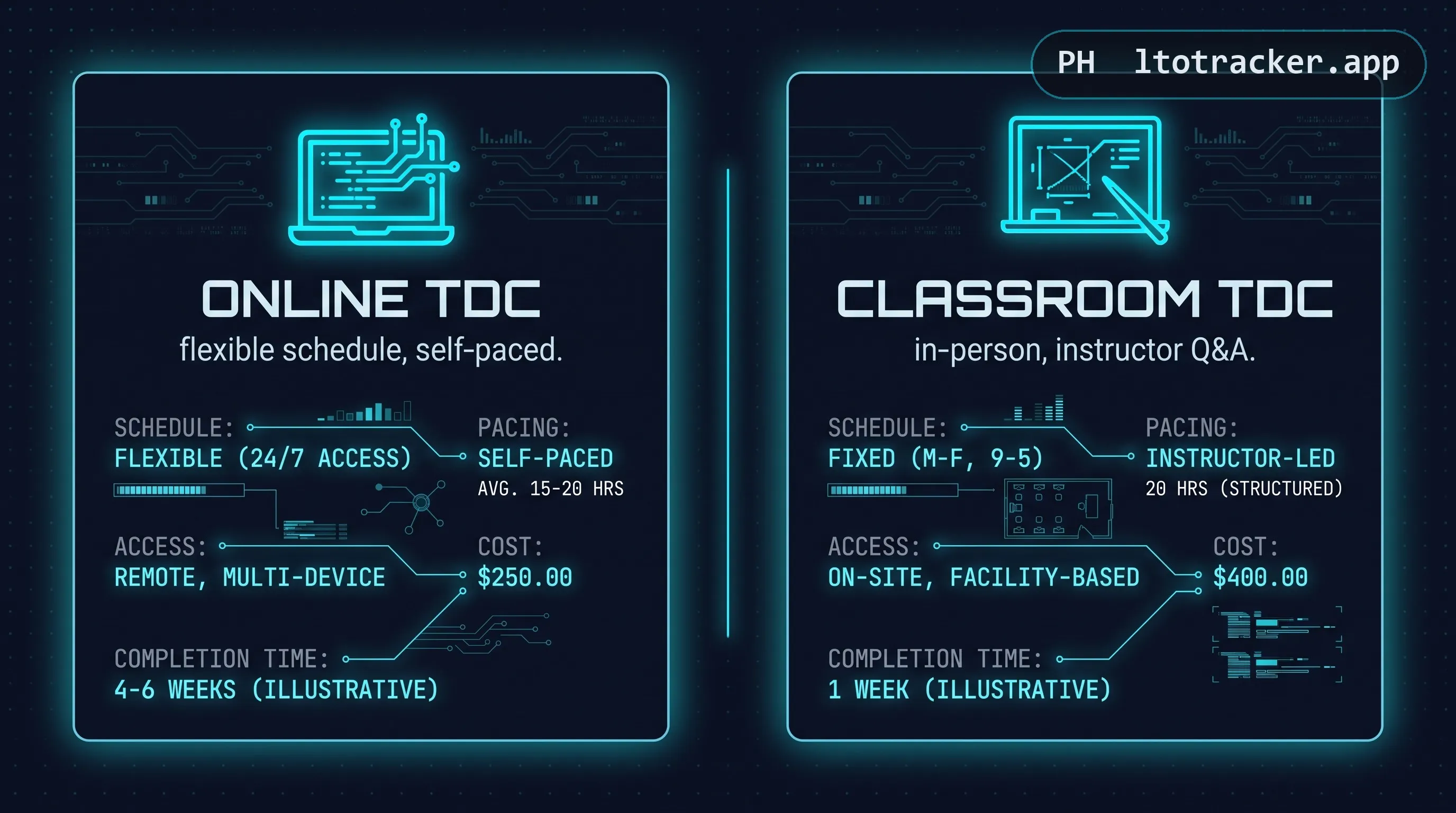
In recognition of the busy schedules of many applicants and the growing demand for flexible learning options, the Land Transportation Office has authorized the delivery of the theoretical driving course through digital platforms. This means you now have the highly convenient option to take your TDC online from the comfort of your own home, provided you enroll in an LTO accredited driving school that is explicitly certified to offer distance learning.
Taking the TDC online offers unparalleled flexibility. Traditional classroom settings require you to commit to fixed schedules, often over a single weekend or spread across several consecutive weeknights. In contrast, an online course typically allows you to consume the educational modules at your own pace. You can watch the instructional videos, read the digital manuals, and complete the practice quizzes whenever your schedule permits, whether that is early in the morning before work or late at night.
However, the flexibility of the online option does not mean the curriculum is any less rigorous. The online modules cover the exact same standardized topics as the face to face classes. To ensure accountability and prevent applicants from simply skipping through the material, these digital platforms employ various monitoring techniques. Some systems require you to periodically answer prompt questions to verify your active participation, while others track the exact amount of time you spend on each specific module.
Furthermore, while the instructional portion of the TDC online can be completed remotely, the final written assessment is often handled differently depending on the driving school and the current specific guidelines of the Land Transportation Office. Some accredited institutions may require you to visit their physical office solely to take a proctored final exam to guarantee the integrity of the test. Always clarify the testing procedure with your chosen driving school before enrolling in an online program.
Choosing between a traditional classroom setting and the TDC online ultimately depends on your personal learning style. If you thrive in an interactive environment where you can ask an instructor questions in real time and discuss scenarios with other aspiring drivers, the face to face option is likely superior. But if you are a self motivated learner who requires schedule flexibility, the online route is an excellent and fully legal alternative.
How to Find a Free Theoretical Driving Course
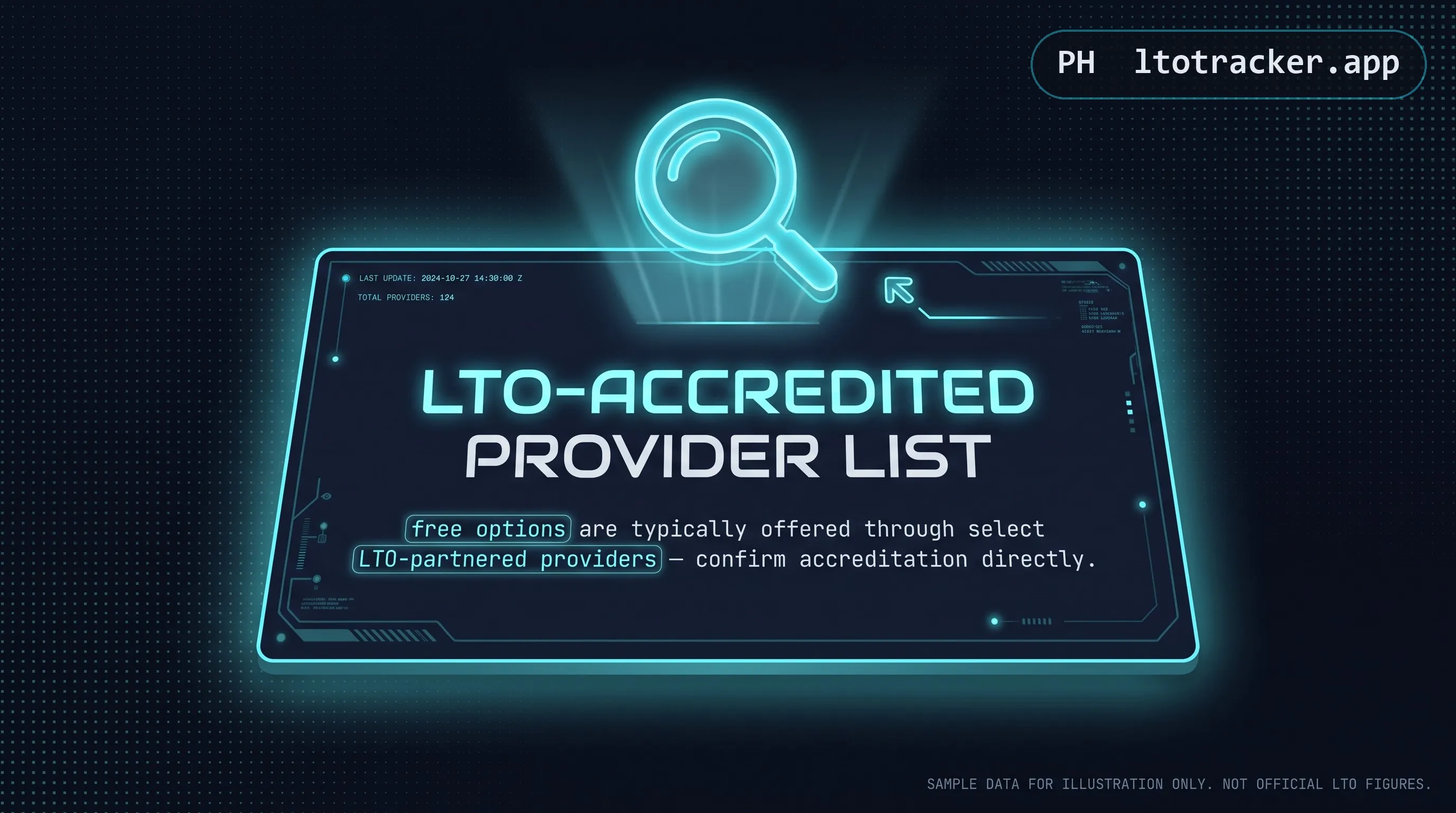
One of the most common concerns regarding the new mandatory education requirements is the financial burden it places on applicants. Enrolling in an accredited private driving school can be expensive, adding a significant cost to the overall process of obtaining a driver license. Fortunately, the government is aware of this barrier and has implemented initiatives to provide a free theoretical driving course to the public.
The Land Transportation Office frequently hosts a free theoretical driving course through its various regional Driver Education Centers scattered across the country. These government sponsored seminars cover the exact same standardized fifteen hour curriculum and are taught by certified LTO instructors. Passing the final exam at a Driver Education Center carries the same weight as passing it at a private driving school, and your completion data will be seamlessly integrated into the central database.
The primary challenge with securing a slot in a free theoretical driving course is the overwhelming demand. These slots are typically offered on a first come first served basis, and they tend to fill up incredibly fast. The LTO regional offices usually announce the schedules for these free seminars on their official social media pages and local bulletin boards. To successfully secure a spot, you must proactively monitor these official channels and be prepared to register immediately once an announcement is made.
In addition to the regional Driver Education Centers, several local government units, such as city or municipal halls, occasionally partner with the Land Transportation Office to sponsor free seminars for their constituents. These programs are often tied to local road safety campaigns or community outreach initiatives. Inquiring with your local barangay hall or the city traffic management office is a proactive way to discover if any sponsored programs are scheduled in your specific area.
While the free theoretical driving course eliminates the tuition fee, be prepared to invest your time. These government sponsored seminars are almost always conducted in a traditional face to face setting, requiring your physical presence for the full fifteen hours, usually split across two consecutive days. If your schedule cannot accommodate this fixed commitment, investing in an online course from a private school might ultimately be the more practical choice despite the cost.
Preparing for the Final Written Exam
Whether you attend a paid classroom session, complete the TDC online, or secure a spot in a free theoretical driving course, every single applicant must face the final written assessment. This exam is the ultimate gatekeeper; you must pass it to receive your electronic completion certificate and proceed with your student permit application.
Do not make the mistake of assuming the exam will be based purely on common sense. The Land Transportation Office has designed the questions to strictly test your knowledge of specific regulations, right of way hierarchies, and the precise meanings of somewhat obscure road signs. Relying on intuition instead of diligent studying is a guaranteed path to failure.
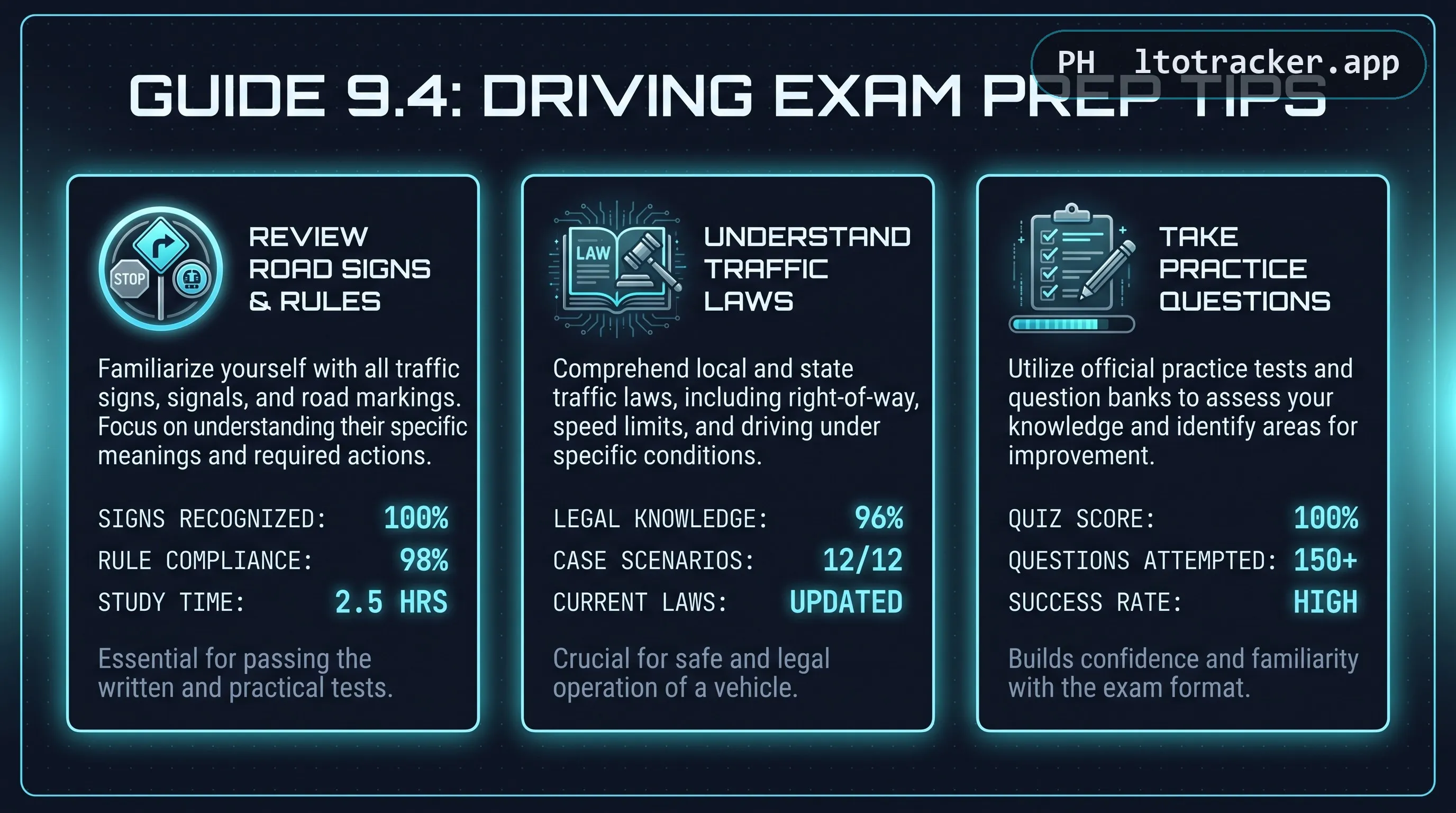
The best way to prepare is to actively engage with the course material throughout the fifteen hours. Take detailed notes, especially concerning the penalties for specific violations, the speed limits designated for different types of roads, and the exact procedures for handling emergency situations like brake failure or a blown tire. If you are taking the course online, do not rush through the modules; replay the instructional videos if a concept remains unclear.
In addition to your course notes, utilize the vast array of free review materials available on the internet. The official LTO portal often provides downloadable reviewer documents that mirror the format and content of the actual exam. Furthermore, many independent websites and mobile applications offer interactive mock exams. Taking these practice tests repeatedly is one of the most effective ways to identify your weak areas and familiarize yourself with the phrasing of the questions.
On the day of your final exam, arrive early to ensure you have time to calm your nerves. Read every question carefully. The exam often includes scenario based questions that require you to apply the rules of right of way rather than just recalling a fact. Do not rush your answers. Use the process of elimination to discard obviously incorrect options, and trust the knowledge you gained during your fifteen hours of dedicated study.
The theoretical driving course is the vital foundation of your entire driving career. Whether you choose the flexibility of taking your TDC online or secure a slot in a free theoretical driving course, treat the fifteen hours as a serious educational commitment. The knowledge you gain here will not only help you secure your student permit but will ultimately keep you and other motorists safe on Philippine roads for years to come.