Tracking Your License
If you have already applied for your non pro license and are waiting for the physical plastic card to be printed and released, you can use our instant tracking tool below to check its delivery status.
Free · Instant · Relayed live from the official LTO-NCR system, nothing is stored. Type DEMO to preview a sample result.
Understanding the Non Pro License in the Philippines
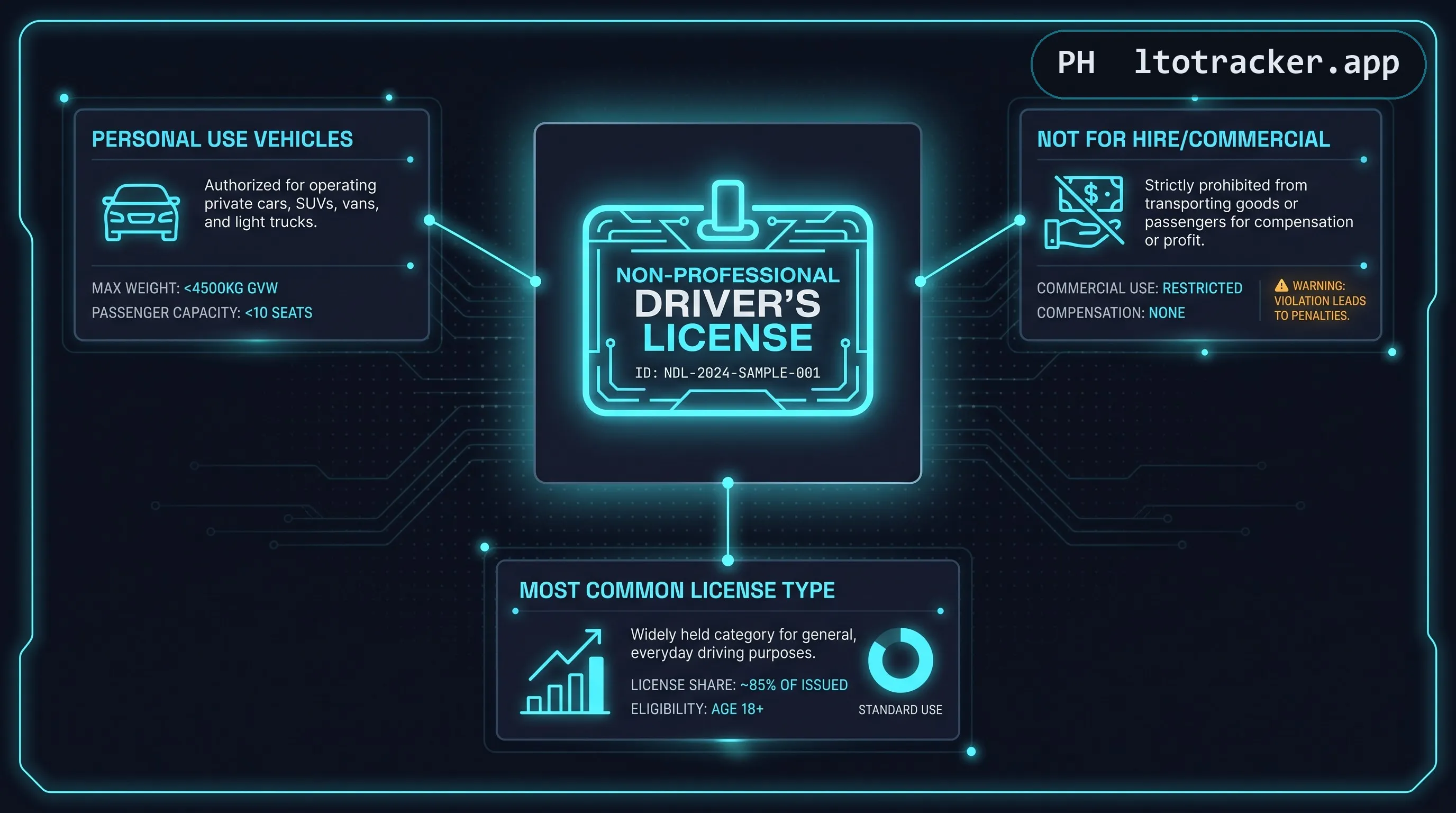
Securing a non pro license is a significant milestone for many Filipinos, marking the transition from a supervised learner to a fully recognized, independent driver on public roads. The Land Transportation Office defines a non professional driver's license as the standard permit granted to individuals operating motor vehicles strictly for private use and personal transportation. Unlike a professional license, a non pro license does not authorize the holder to drive public utility vehicles, delivery trucks, or any vehicle for commercial compensation.
The importance of a non professional driver's license extends beyond simply driving legally. In the Philippines, this license is widely recognized as a primary, government issued identification document. It is accepted by all major banks, government agencies, and private institutions for verifying identity and processing official transactions. Therefore, maintaining a valid non pro license is incredibly beneficial for everyday administrative tasks.
Before diving into the application process, it is crucial to understand the responsibilities that come with holding a non pro license. Driving is a privilege granted by the state, not a fundamental right. The Land Transportation Office expects every licensed driver to possess a thorough understanding of traffic rules, road safety protocols, and defensive driving techniques. The rigorous non pro license requirements and examinations are designed specifically to ensure that only qualified, knowledgeable, and medically fit individuals are permitted to operate motor vehicles.
The validity period of a non pro license depends on the applicant driving history. For first time applicants and those renewing with traffic violations, the license is typically valid for five years. However, motorists who maintain a clean driving record with zero traffic violations during their five year term are rewarded upon renewal with a license valid for ten years. This tiered validity system strongly incentivizes strict compliance with traffic laws and promotes a culture of safer driving nationwide.
Complete Non Pro License Requirements
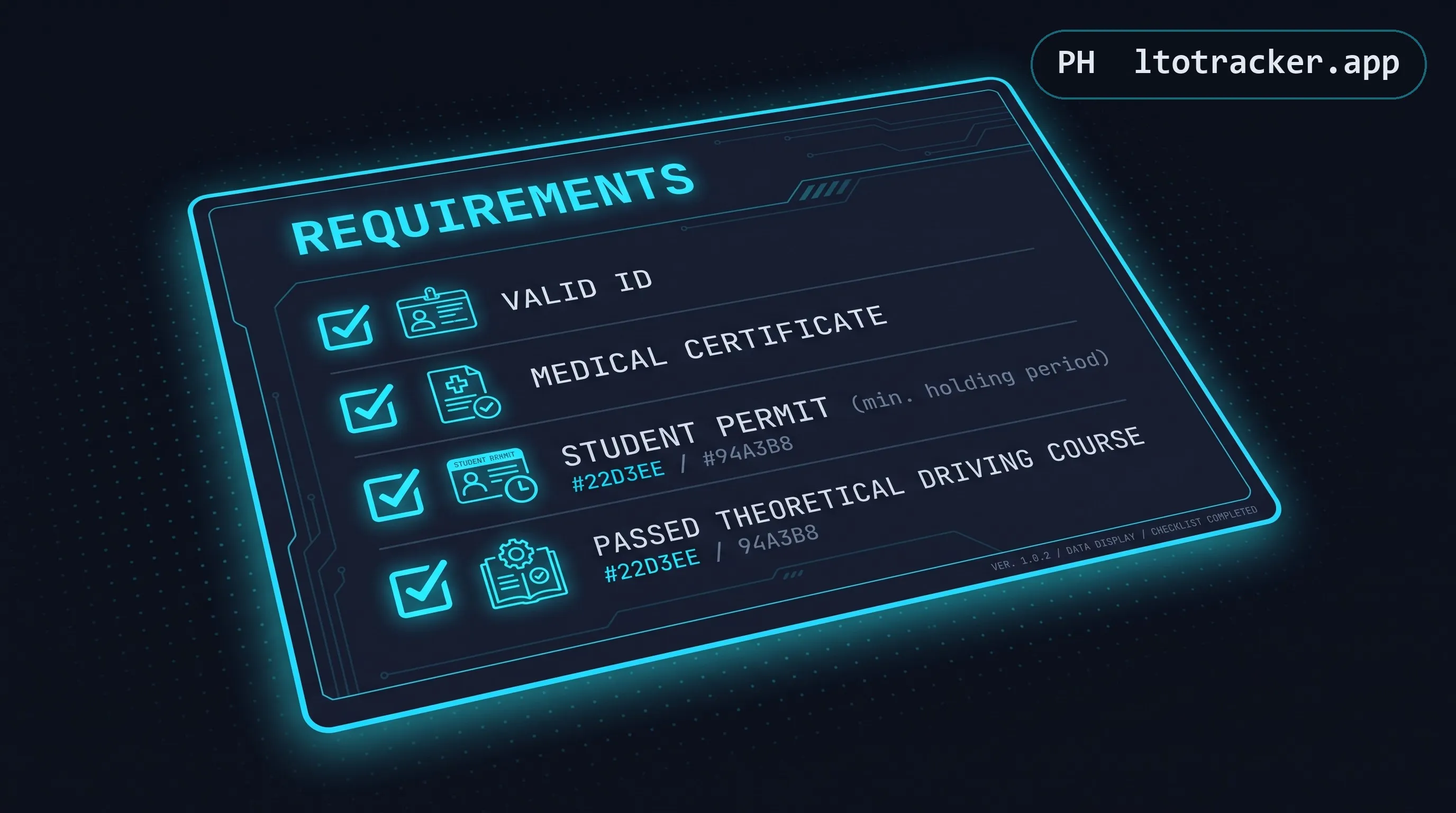
The Land Transportation Office has implemented a strict set of criteria and documents that every applicant must fulfill before they can be evaluated for a driving permit. Gathering these non pro license requirements diligently will save you significant time and prevent unnecessary delays during your visit to the LTO branch.
The most fundamental prerequisite among the non pro license requirements is a valid Student Driver Permit. You must have held your student permit for a minimum of thirty one days from the date of its issuance before you are eligible to apply for a non professional driver's license. This mandatory holding period is designed to provide you with adequate time to practice driving under the supervision of a licensed adult or an accredited driving instructor.
Equally important is the Practical Driving Course certificate. The Land Transportation Office now mandates that all applicants undergo formal practical instruction. You must enroll in an LTO accredited driving school and complete the minimum required hours of hands on driving lessons specific to the vehicle category you intend to drive. Upon successful completion, the driving school will electronically transmit your Practical Driving Course certificate directly to the LTO system, though it is always wise to keep a physical copy for your records.
You will also need to secure a new medical certificate specifically for this application. The medical examination must be conducted by a registered physician at an LTO accredited medical clinic. The doctor will assess your visual acuity, hearing, and general physical fitness to ensure you do not possess any medical condition that could impair your ability to drive safely. Similar to the driving certificate, the clinic will transmit the medical results electronically to the Land Transportation Office database.
Lastly, you must prepare a duly accomplished Application for Driver License form. You can download this form from the official LTO website and fill it out prior to your visit, or you can secure a blank copy directly from the information desk at the branch. Make sure to carry original and photocopies of your valid government identification, and if you are a minor aged seventeen, you must provide a notarized letter of consent from your parent or legal guardian along with their identification.
How to Get Non Pro License LTO Step by Step
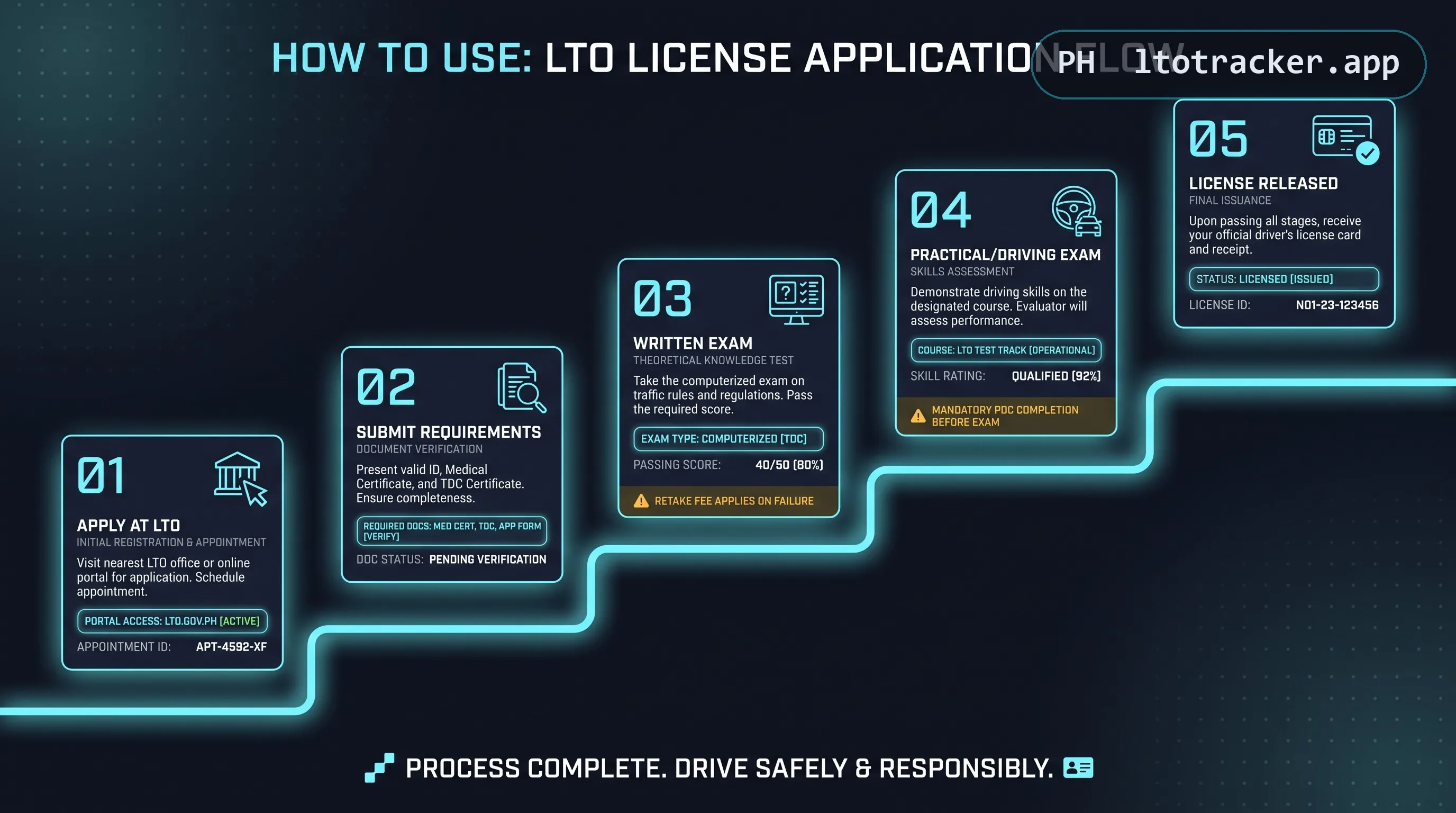
Understanding how to get non pro license lto involves navigating a structured series of evaluations. The process begins the moment you arrive at the Land Transportation Office and concludes when you pass the final driving test. Following these steps closely will ensure a smooth and successful application.
Step one involves document evaluation. Head directly to the customer service counter or the receiving section of the LTO licensing center. Submit your completely filled out application form, your original student permit, your medical certificate, and your Practical Driving Course certificate. The evaluating officer will review your documents to verify their authenticity and ensure that all non pro license requirements have been strictly met. If everything is in order, you will be issued a routing slip and directed to the cashier.
Step two is the payment of application fees. Proceed to the cashier window and pay the required examination fee. The exact amount may vary slightly depending on current LTO memorandums, so it is advisable to bring enough cash. Once payment is settled, you will receive an official receipt. Keep this receipt safe, as you will need to present it at various stations throughout the testing process.
Step three is the biometrics and photo capture. You will be called to the encoding section where an LTO personnel will take your digital photograph, capture your electronic signature, and scan your fingerprints. This biometric data will be permanently embedded in your physical plastic card and the central database, ensuring the security and integrity of your non professional driver's license. Ensure you are dressed appropriately, as sleeveless shirts and excessive facial accessories are typically prohibited during the photo capture.
Step four is the critical written examination. You will be directed to the testing room to take the computerized written exam. The exam covers traffic rules, road signs, right of way regulations, and emergency procedures. To pass, you must achieve the minimum required score determined by the Land Transportation Office. It is highly recommended to review the official LTO reviewers available online or use the free portal to take mock exams before your actual test day.
Step five is the practical driving test. If you successfully pass the written exam, you will move on to the final hurdle. An LTO examiner will accompany you in a testing vehicle to evaluate your actual driving skills. You will be assessed on your ability to perform basic maneuvers, obey traffic signs within the testing facility, and demonstrate safe vehicle control. You may use an LTO provided testing vehicle for a rental fee, or you may use your own private vehicle provided it matches the restriction code you are applying for.
Step six is the final payment and release. If the examiner passes you on the practical driving test, you will return to the cashier to pay the actual license fee. After payment, you will wait for your name to be called at the releasing window. Depending on the availability of plastic cards at the branch, you will either receive your official non pro license card immediately or an official receipt that serves as your temporary license until the card is printed.
Tips for Passing the Written and Practical Exams
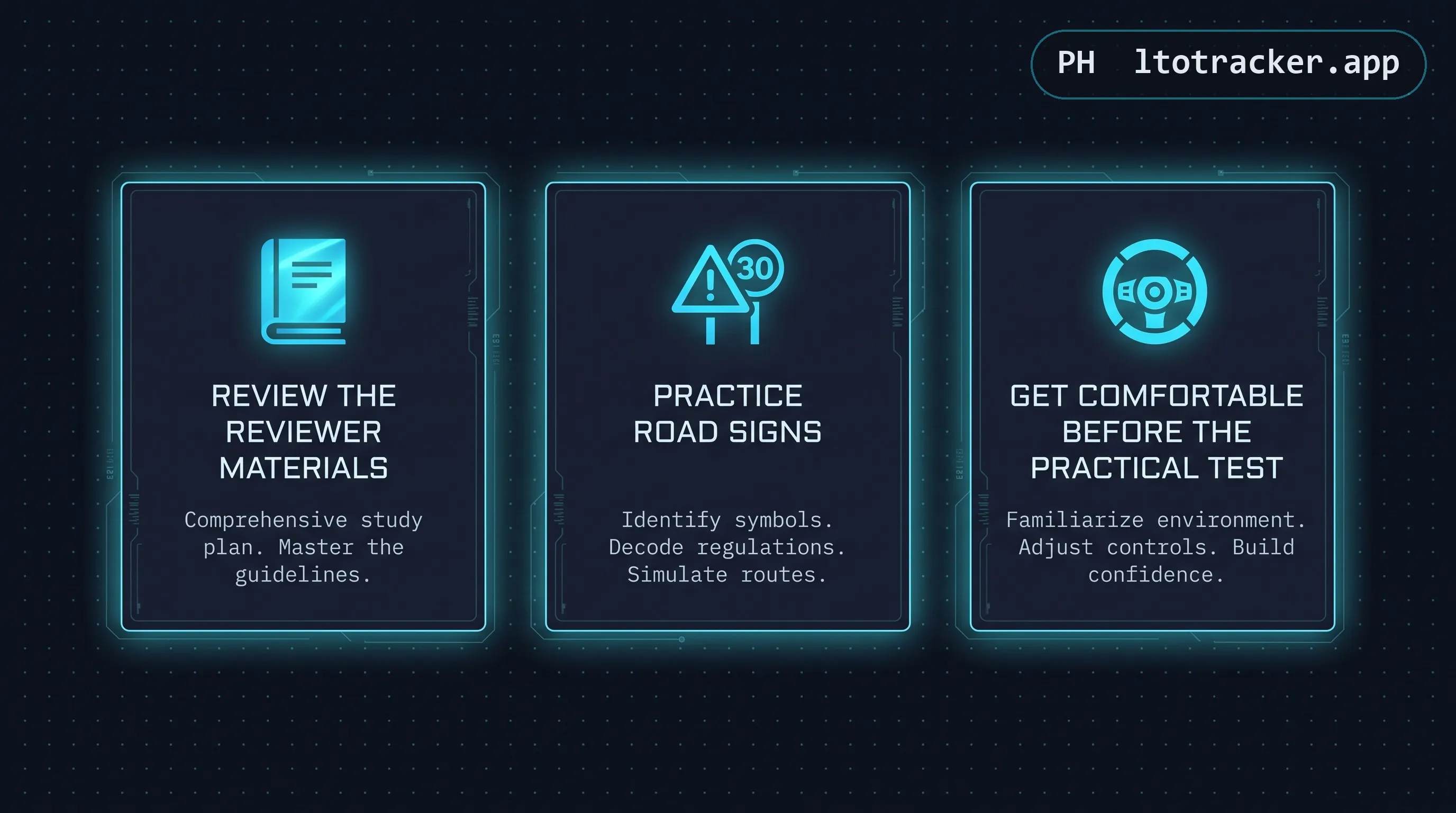
The examinations required for a non professional driver's license are deliberately challenging to ensure road safety. However, with proper preparation and a calm mindset, passing both the written and practical tests on your first attempt is highly achievable.
For the written exam, do not underestimate the difficulty of the questions. Many applicants fail because they rely solely on common sense rather than studying the specific traffic codes. The Land Transportation Office portal offers excellent, free review materials that cover every topic included in the exam. Spend at least a few days thoroughly reading these reviewers. Pay special attention to the meanings of different road signs, the hierarchy of right of way at intersections, and the specific penalties associated with common traffic violations.
When taking the computerized written test, read each question carefully. Some questions are phrased to test your attention to detail. Do not rush. You are given ample time to complete the examination. If you are unsure about an answer, use the process of elimination to narrow down the choices. Trust your preparation and do not second guess your initial instincts unless you find clear evidence in the question to change your answer.
For the practical driving test, the examiner is looking for safe, confident, and defensive driving behavior rather than perfect technical maneuvers. Before starting the engine, always perform a basic pre drive checklist. Adjust your seat, check your side and rearview mirrors, and most importantly, fasten your seatbelt. Failing to wear a seatbelt before driving is an automatic failure in the eyes of many examiners.
During the practical test, obey all speed limits and road signs within the LTO compound. Always use your turn signals when changing lanes or making turns, even if there are no other vehicles around. The examiner wants to see that signaling has become an automatic habit for you. Maintain a smooth and steady speed, avoid sudden braking, and demonstrate proper clutch control if you are testing in a manual transmission vehicle. If you make a minor mistake, stay calm and correct it safely; examiners often pass applicants who show the ability to recover gracefully from small errors.
Maintaining and Renewing Your Non Pro License
Once you have successfully obtained your non pro license, your responsibility as a driver has just begun. Maintaining the validity and good standing of your license is essential for continuing your driving privileges in the Philippines. The Land Transportation Office has strict rules regarding license expiration and traffic violations. Your license also carries one or more restriction codes that determine exactly which vehicle types you're legally allowed to drive, so it's worth understanding what yours actually covers.
You must renew your non professional driver's license before or on your birthdate of the expiration year printed on the card. The LTO allows you to process your renewal up to sixty days in advance of your expiration date. Renewing early is highly recommended to avoid the rush and potential system downtimes that might occur exactly on your birthday. If you fail to renew on time, your license becomes expired, and driving with an expired license is a serious violation that incurs heavy fines and potential vehicle impoundment.
Furthermore, renewing an expired license subjects you to penalty fees. The longer you let the license remain expired, the higher the penalties become. If your non pro license remains expired for more than two years, the Land Transportation Office will require you to retake both the written and practical driving examinations to prove that you still possess the necessary skills and knowledge to drive safely.
The renewal process itself is much simpler than the initial application. You generally only need to secure a new medical certificate from an accredited clinic and undergo the biometric capture process again. However, if you have accumulated multiple traffic violations during the validity of your license, the LTO may require you to attend a mandatory Comprehensive Driver Education seminar before your renewal can be approved.
Ultimately, the best way to maintain your non pro license is to practice defensive driving, obey all traffic laws, and respect other motorists and pedestrians on the road. A clean driving record not only ensures a smooth and penalty free renewal process but also qualifies you for the highly desirable ten year license validity, significantly reducing the administrative hassle of maintaining your driving privileges in the future.
Securing a non pro license at the LTO requires preparation, patience, and a genuine commitment to road safety. By carefully gathering all the non pro license requirements, studying diligently for the exams, and understanding how to get non pro license lto through the proper channels, you will confidently earn your place as a responsible licensed driver on Philippine roads.